

Sixty years after the Black Panther Party was founded in Oakland, California, the organization’s imagery remains instantly recognizable: black berets, leather jackets, and raised fists.
But the story of the Panthers was never just about an image. It was about a set of demands and the daily work of meeting needs that institutions had failed to address.
Their work reached across the coasts to Washington, DC, where their local chapter organized, held rallies, fed children, supported families visiting incarcerated loved ones, and opened a community health clinic. Some of that history unfolded at addresses people still pass today without knowing what happened there.
Born in the Bay with a Big Vision
Huey P. Newton and Bobby Seale founded the Black Panther Party for Self-Defense on October 15, 1966, in Oakland, amid struggles over police violence, racial inequality, protest over the assassination of Malcolm X, and the fight for Black political power.
It became known for monitoring police conduct and asserting a right to armed self-defense, and created their Ten-Point Program calling for employment, housing, education, and justice.
The community “survival programs” turned the political demands into practical services with free breakfasts for children, food distribution, health care, and transportation for those in need. The Party’s organizing was backed by influential women like Joan Tarika Lewis, the first woman to join, Elaine Brown, Kathleen Neal Cleaver, Ericka Huggins, and Afeni Shakur, Tupac’s mother, whose leadership and labor were central to keeping these programs running.
Black Panthers in Chocolate City
The Black Panther’s activity in DC came before a local chapter was established.
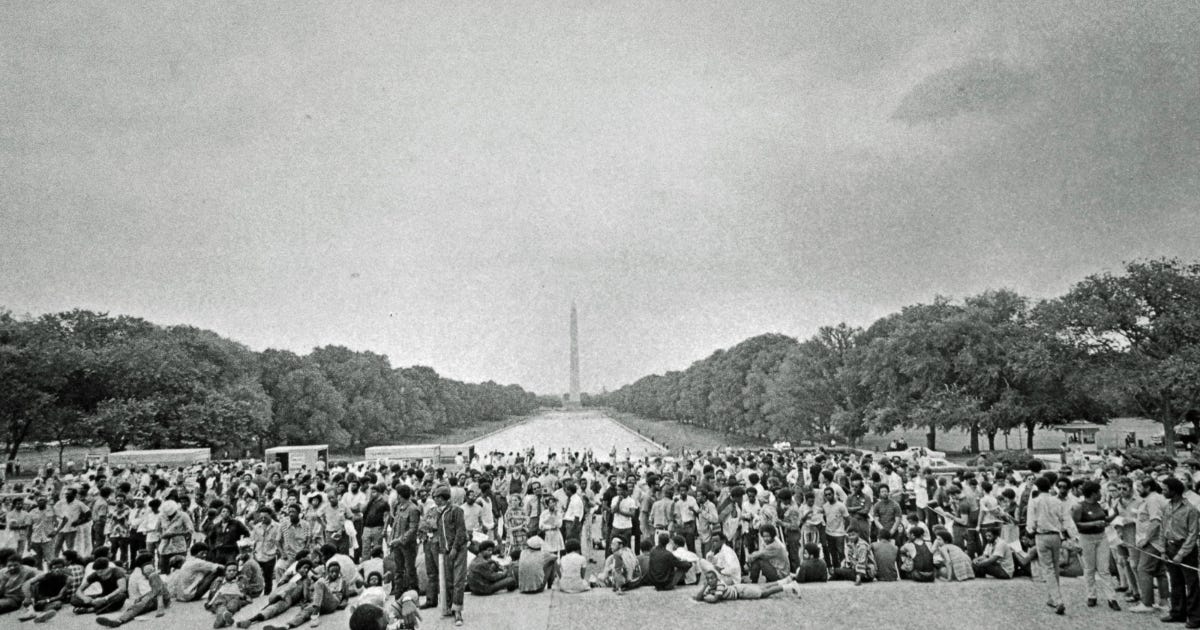
On June 19, 1970 (Juneteenth) roughly 1,000 Panthers and supporters gathered at the Lincoln Memorial for a rally that included an announcement about the formation of a DC chapter and plans for a Revolutionary People’s Constitutional Convention to be held in Philadelphia.
The setting was as symbolic as the moment: a movement born on the West Coast was making its case at one of the capital’s most recognizable monuments. But the more lasting local story was not just the rally, It was what happened afterward, in the neighborhoods.
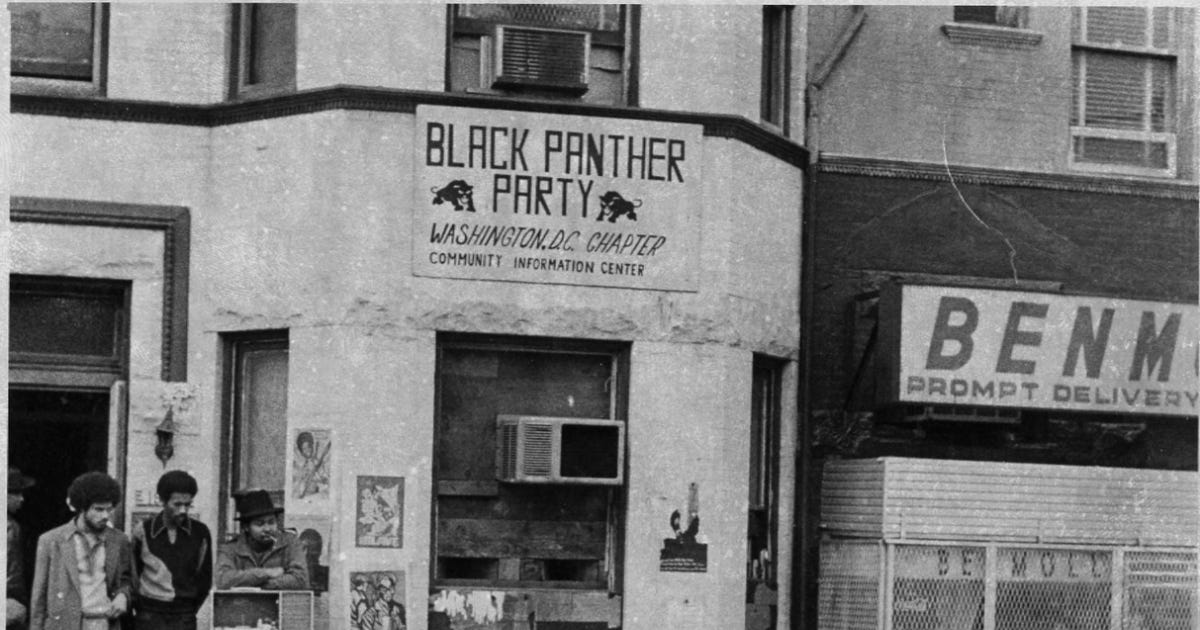
DC’s Black Panther Party chapter was formed in January 1970 under Jim Williams, who was sent in from Oakland. The Party’s first DC headquarters was located at 2327 18th Street NW in Adams Morgan, now a popular nightlife destination in the city.
They had a short stay at that location before establishing their community information center located at 1932 17th Street NW (now a private residence), and a second location at 2804 14th Street NW. They gave out free clothing and breakfast from both.
The Party’s approach challenged the idea that political organizing had to stop at speeches and demonstrations. Feeding a child before school was an immediate intervention, but also a statement about what communities deserved and who was responsible for providing it.
By 1971, the DC chapter had grown to approximately 100 members. It also established Hard Knocks University, which offered college-level classes from a storefront at the corner of 3rd and H Streets NE. The chapter’s growing emphasis on education and community services reflected a broader shift in the Party’s strategy amid police repression and infiltration.
They also expanded their offerings to include a food bank and free weekly bus transportation for people visiting family at Lorton Prison in Virginia. By 1972, the organization established a People’s Free Health Clinic in the basement of the Johenning Baptist Center at 4025 9th Street SE. Today, the address is listed under “New Black Panther Party DC.”
These community efforts were not interchangeable with the Party’s more militant politics; they were both integral to the organizing philosophy. The Panthers understood food, medical care, transportation, and the ability to stay connected to family as part of establishing dignity and power for underserved communities
Like its counterparts, the DC branch of the Panthers faced pressure from policing and surveillance, alongside the difficulties affecting the national Party. Splits, repression, and decline contributed to disbanding across the groups.
Sixty years later, the question the Panthers originally posed still feels strikingly direct: What does a community need to thrive, and what happens when people organize to provide it themselves?
In DC, the answers once included breakfast tables uptown and a health clinic east of the river, in locations that still stand today.
The Black Panther Party’s DC: A Self-Guided History Crawl
The Black Panther Party’s Washington story lives in a mix of public monuments, surviving buildings, archival records, and places where the city has changed around the history.
This trail is not a reenactment of the Panthers’ daily routes, it’s a way to explore documented chapters of the movement and the broader Black Power era, with care for the people who occupy these spaces today.
